Book bans have been a hot topic in the news lately, with British newspapers decrying the barbarity of American politicians banning everything from Maus to Jodi Picoult.
UK readers sympathise with Floridian librarians; nod at the bravery of teenagers wearing ‘I Read Banned Books’ t-shirts to their graduations; donate small amounts to charities distributing contraband literature.
Secretly, we comfort ourselves that this is happening far away; we tell ourselves that it would never be us, not in 2023; we lie to ourselves that censorship & book bans are the preserve of humid evangelical backwaters.
And yet book bans are happening, in the UK, in 2023.
V&A Museum Book Ban
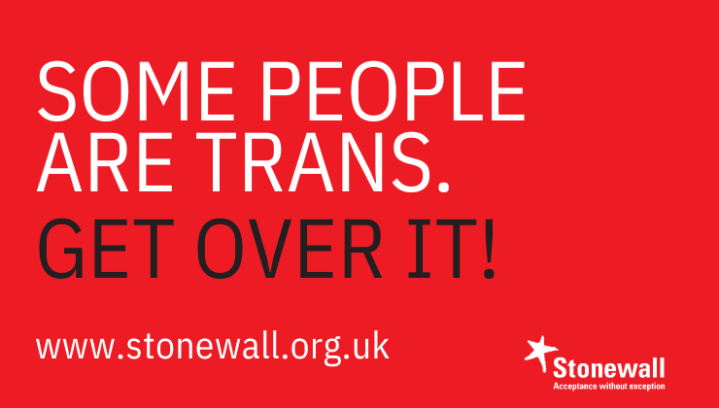
The V&A Museum recently removed a poster saying “Some People Are Trans, Get Over It,” from a Young VA exhibition, and two trans inclusive books from its shop, including Here and Queer by Rowan Ellis and Seeing Gender by Iris Gottleib. An equivalent poster saying “Some People Are Gay, Get Over It”, was allowed to remain.
Their spokesperson produced the excuse that:
“The senior team felt more consultation was necessary with young people and teachers on how to present these topics, to ensure their perspectives were more fulsomely represented.”
What perspectives does the V&A want to be more ‘fulsomely represented’?
Does the V&A Museum plan to introduce to children the ‘perspective’ that trans people don’t or shouldn’t exist?
The Removed Books
Neither book that the V&A have chosen to remove from their Young VA Museum is at all controversial (to anyone sensible, at least).
Ellis’ book Here and Queer is a bestseller. The author has been featured in Teen Vogue, Elle, Forbes, the Guardian and the BBC. The author and YouTuber isn’t a controversial figure in any way; sadly and ironically she created a video a year ago about the dangerous rise of anti-LGBTQ book bans. Seeing Gender by Iris Gottleib is similarly uncontroversial; in all good bookshops and rated 4.3 stars on Goodreads.
Having had more time to formulate an excuse, the V&A told Hyperallergenic magazine that it removed the books because they were 14+, and were looking for ‘age appropriate alternatives’. Which might be plausible if it weren’t for the removed poster, their previous comments, and that other books for older children are prominently featured in their book shop.
It’s hard to take seriously the arguement that F. Scott Fitzgerald is appropriate for young children, but Rowan Ellis is not.
Why did the V&A Censor This Content?

The controversial opinions that Tristram Hunt and the V&A Museum seem to think warrant immediate removal and consultation, is the concept that trans people exist, and that it is acceptable to be trans.
The disturbing implication is that Tristram Hunt and the V&A Museum think that the existence of trans people is wrong, and inherently inappropriate for children.
We abolished Section 28 in 2003; and thank goodness for it. It is deeply frightening and disturbing to see the V&A Museum re-enact the principles of that disgusting legislation in 2023.
Even more disturbing, given how important this is, very few publications – Art Professionals, Pink News, and, bizarrely, the Daily Mail – have written about this situation.
This situation being the V&A Museum censoring LGBTQ posters and literature.
Staff Objections
I do want to highlight that many V&A staff strongly objected to what director Tristram Hunt and the V&A are doing. The unions PCS and Prospect are actively fighting Hunt’s decision.
Steven Warwick, PCS Culture Group Secretary, said:
“PCS is absolutely clear that we oppose the removal of these objects and urges the V&A to reverse this decision. The poster was simply a statement of fact that ‘Some people are trans’. That the director of the V&A considers this to be a controversial statement is disappointing. Seeking to hide the existence of Trans people contributes to the idea that being Trans is somehow unacceptable and adds to the current climate of transphobia and trans-erasure.”
In the End

The V&A Museum deciding to censor LGBTQ posters and literature is disturbing, dangerous and regressive. It is also ironic; in 2018 they ran multiple exhibitions and events decrying the dangers of censorship and book banning.
Tristram Hunt used to campaign on a pro-LGBTQ platform when he was an MP. He claimed he wanted to stamp out transphobic bullying. He even cited the horrors of Section 28 when outlining his policies.
Now it appears, far from condemning Section 28, Tristram Hunt seeks to recreate it.
I have written to the V&A Museum to express how disturbed I am by their actions. I hope they do the right thing – by reinstating the LGBTQ poster and books they censored, and apologising to the authors, the public and the LGBTQ community.
V&A Response
I have had an incredily dismissive and infuriating response to my complaint. I’m putting how I feel here so that I don’t take it out on the customer service rep – who likely had very little to do with the response’s wording.
Firstly, the V&A attempts to frame this situation as a row on social media – a tack the newspapers have also been taking. This situation is not a social media row.
The situation is that the V&A have censored and removed pro-LGBTQ, trans supportive content and books.
Second, they excuse their actions by highlighting the many pro-LGBTQ exhibitions in their adult museum, which misses the point in spectacular fashion. The whole issue is that the V&A is censoring pro-LGBTQ content because it considers it inappropriate for children specifically – which is horrifically transphobic and homophobic.
Thirdly, and most infuriatingly, they say:
“We made the complex decision to remove several objects, covering a range of contemporary topics, from a display about how design is used as a creative tool to campaign for different causes… and how we present gallery content in a more considered way…This decision was not intended to be exclusionary.”
I’m going to repeat this; there were two Stonewall posters in that exhibit. They had identical formatting and messaging. The only difference between the one that was kept and the one that was removed is that the latter supported trans rights.
The V&A chose to exclude trans supportive material solely because it was trans supportive.
 COPPER LANTERN BOOK REVIEWS