
Tell Me Why is a narrative game by DontNod Entertainment, following a pair of twins, Tyler and Alyson, with the ability to communicate with each other through telepathy, who reunite after ten years in their hometown in rural Alaska and investigate the death of their mother.
This spooky, fairytale style mystery explores themes of love, loss, memory and acceptance, in a bleak yet beautiful setting.
The Good
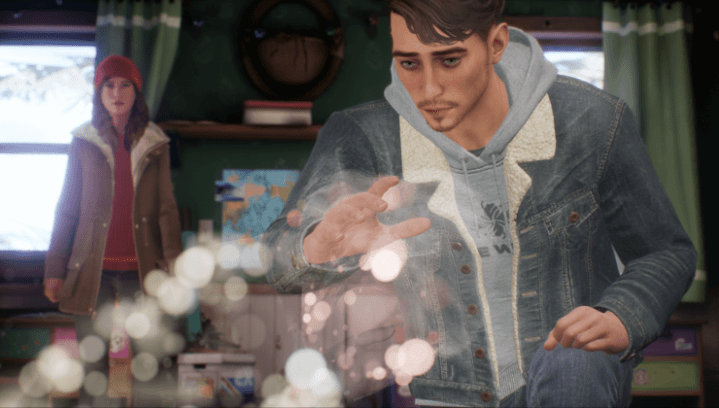
The game is visually stunning. I was in awe of the way the characters’ hair and facial expressions were animated, and the landscapes were gorgeously realised. I liked the fairytale elements, which I haven’t seen utilised so well since Fable 2. I was hooked by the central story, and I love a theme focusing on unreliable narrators and the fallibility of memory. The fact that two people can genuinely believe completely separate narratives is something I find fascinating.
Released in 2019, Tell me Why was the first triple A game to feature a trans main character. DontNod consulted with GLAAD, and cast a trans man as the character’s voice actor. This is genuinely admirable, and while it should be the bare minimum, still isn’t. The way the other characters react to Tyler is nuanced; it’s a small mountain town with a somewhat religious population, and there are some tricky moments. One particularly lovely interaction involves an old friend of the family reacting clumsily; Tyler confronts him and he later apologises by giving Tyler a knife “like every good man should have”. It’s a beautiful gesture of acceptance, and appropriate to both characters.
The Bad

The flipside to this is that Tyler can be a bit of a Marty Stu; that is, just a bit too perfect. He engages in therapy, studies up on healthy masculinity… he even mentors underprivileged youth.
Reviewer Carolyn Petit highlighted that in DontNod’s goal to portray Tyler in a positive light, he becomes a little sterile and anodyne. I agree with her; she also pointed out that the relationship Tyler has with Michael is, again, a bit too perfect. There, I do disagree. Why shouldn’t the game feature a little wish fulfilment? LIS: True Colours gives the protagonist a choice between a sensitive yet hunky forest ranger, and a nerdy hipster lesbian who runs a record store – complete with cat. Why shouldn’t Tyler get an idealised love interest?
Dia Lacina pointed out in her review in Vice that the portrayal of the townspeople actually isn’t that great; she points out that no one deadnames, misgenders or attacks Tyler, and that sadly, that simply isn’t realistic. She’s right, and it’s an interesting contrast with LIS: True Colours, where a trans woman wearily points out to her ex girlfriend that being the only trans person in a small mountain town might not be safe.
DontNod Entertainment
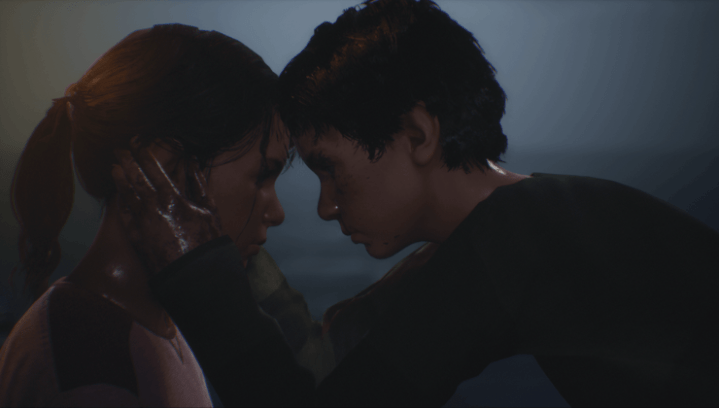
As a studio, DontNod have a tendency to pile on the trauma until the game becomes difficult to play. Their visuals are always incredible, their storytelling both brutal and beautiful. But their games can be heavy, and I find a lot of their player characters flawed to the point of irritation. In this game, I found it hard to like or connect to Alyson, to the extent that I disliked playing as her. There’s a (somewhat obvious) twist at the end of the first chapter of the game, but the character motivation is never really explained. In excellent Agatha Christie novel Five Little Pigs, a similar twist occurs, but makes sense within the narrative. Without explanation, Alyson’s actions just seem incredibly selfish and cruel.
I also find it a little odd that Tyler ended up in juvie until he was an adult. While the Fireweed centre is portrayed as an excellent, accepting, beneficial institution, I find it strange that an 11 year old defending themselves against a shotgun brandishing adult would be considered culpable.
However, I really respect the way they created the game. As well as working with GLAAD, they consulted with Huna Heritage Foundation in order to portray Tlingit life accurately and respectfully. Executive director of the Huna Heritage Foundation Amelia Wilson, who is Tlingit, advised on delicate aspects such as funeral rites and language. For visuals, the studio worked with two local Tlingit artists: Greenwald and Jeff Skaflestad. The artists walked a fine line between creating work that was authentic and representative, without portraying items that had actual significance to real life clans. DontNod also collaborated with Checkpoint, who specialise in providing mental health resources to gamers and gaming communities. These collaborations make the game richer, better and more respectful.
In the End

I would recommend this interactive fiction game. It’s heavy going, like most DontNod narrative games, but intriguing, intelligent and enjoyable.
 COPPER LANTERN BOOK REVIEWS